A Cybersecurity Story About Maturity, Money, & a House That’s Safe Enough
Imagine you own a million-dollar house in a great neighborhood. It features a chef’s kitchen, hardwood floors, a pool, a home theater, and a garage full of toys you worked hard to afford. Drivers slow down just to look at it.
Now imagine someone out there wants to burn it down. They do not want to steal your belongings or move in. They simply want to watch it burn. We will call them arsonists. You do not know their names or when they might show up, but you know they exist. That uncomfortable fact is our starting point.
You have two choices: hope they never come, or build a real security program around your house. Protecting a million-dollar house shares almost everything in common with protecting a million-dollar business, including one question that trips up experienced executives: how good does our protection actually need to be?
That question has an answer, and it drives this story.
Not All Protection Is Created Equal
People often miss a critical point when discussing fire safety or cybersecurity: protection is not a yes-or-no question. It is not simply about whether you own a smoke detector. It comes down to how well you execute each part of the job; how consistently, how completely, and how professionally.
Think of protection as a scale:
- Low Maturity: Protection is accidental and inconsistent. Someone bought a fire extinguisher years ago, but nobody remembers where it sits.
- Basic Maturity: Protection exists, but it depends entirely on human memory.
- Moderate Maturity: Teams document policies, follow procedures consistently, and run regular checks.
- High Maturity: Leaders actively manage, measure, and improve protection over time.
- Maximum Maturity: You monitor every square inch of the house, build redundant systems, and drill staff with military precision. Frankly, this level delivers more than almost anyone needs.
This scale defines cybersecurity maturity. Maturity carries a real price tag, and higher maturity does not automatically mean better results. Every step up the ladder costs more money. The goal is not reaching the top step. The goal is finding the exact rung that makes sense for your house.
Let’s walk through what that looks like across the core areas of defense.
1. Governance: Deciding How Seriously You Will Take Security
Long before you move into a home, officials enforce building codes, fire codes, and inspections. Someone must take ownership of compliance, and someone must decide how many dollars to invest in protection.
At low maturity, nobody takes charge. Teams make decisions in the moment, create budgets only after disaster strikes, and ignore fire safety plans because none exist. This approach saves money in the short term, but it causes downstream systems to fall apart.
At high maturity, a clear owner manages a real budget, enforces written policies, and reviews performance regularly. This requires upfront capital, but it builds the foundation for everything else. You cannot run great detection or response systems if nobody funds them.
You do not need governance so mature that you hold monthly board meetings about hallway lighting. You need enough oversight to make deliberate decisions instead of accidental ones.
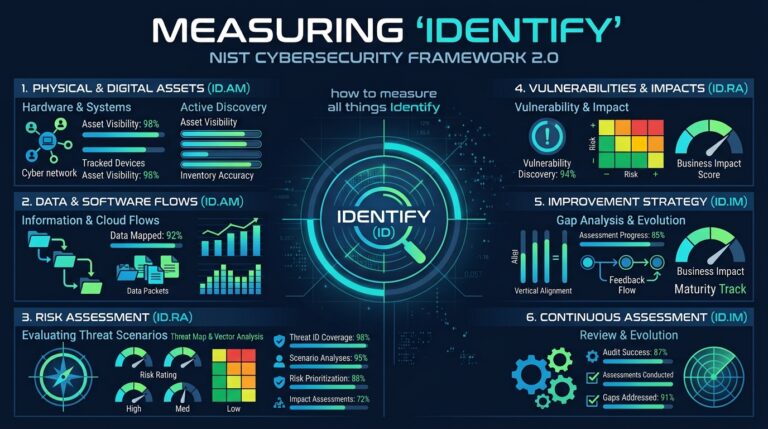
2. Identify: Knowing What You Own and Where Risks Live
Before you can protect your house, you must inventory its contents and pinpoint potential hazards: the fireplace, the gas stove, gasoline stored in the garage, or boxes stacked in the attic.
Low maturity means you operate on guesses. Nobody walks the house with a checklist, so you do not know where the electrical panel sits or which extension cords carry heavy loads. High maturity means you maintain an accurate map of every room, hazard, and valuable asset, updating it as the house changes.
Investing in the Identify function pays off quickly. It costs relatively little compared to technical safeguards and makes every downstream tool more effective.
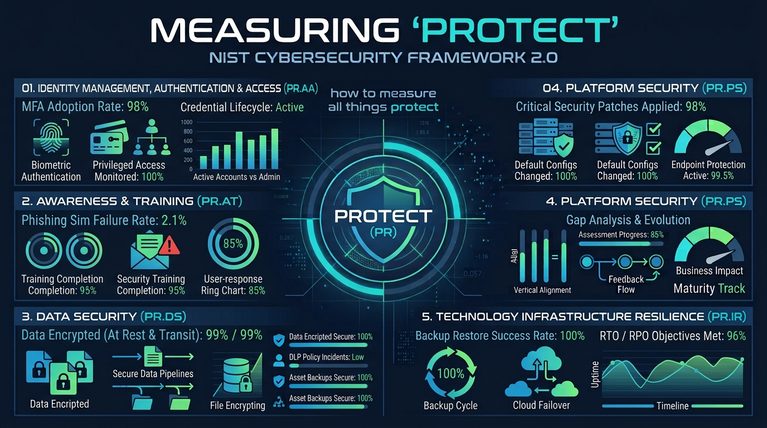
3. Protect: Building Your Physical and Digital Defenses
Once you map your risks, you install safeguards: extinguishers, sprinklers, inspected wiring, and safe storage for flammable materials.
- Low Maturity: You own one old extinguisher and rely on decade-old wiring.
- Moderate Maturity: You maintain a working sprinkler system, inspected wiring, and fire-rated materials in high-risk zones.
- High Maturity: You install sprinklers inside every closet, add fireproofing everywhere, and stack redundant systems like a military bunker.
That top tier sounds appealing until you calculate the bill. Fireproofing every square inch of a million-dollar house easily costs more than the home itself. At that point, you are spending ten dollars to save one dollar. Nobody calls that a smart investment.
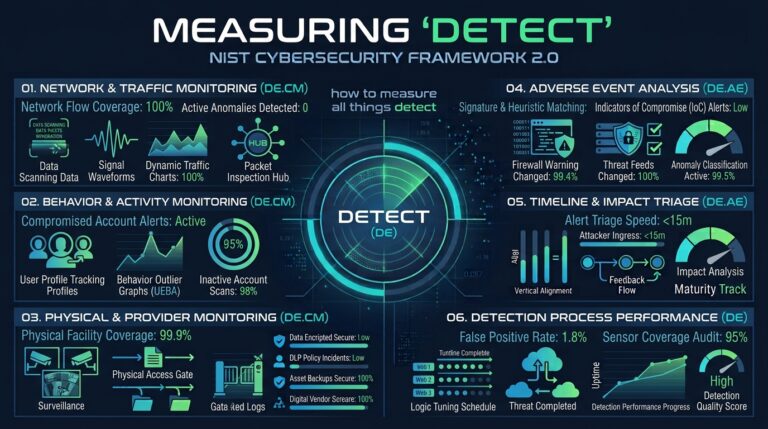
4. Detect: Spotting Problems Before They Spread
If a candle tips over or a wire overheats, what happens next depends on how fast you spot the danger.
Low maturity leaves you with a single hallway smoke detector running on dead batteries; nobody notices the fire until flames engulf the room. Moderate maturity links detectors across every room and routes alerts directly to your phone. High maturity deploys a professionally monitored network that tracks temperature, smoke, and air quality continuously, escalating anomalies instantly.
The jump from low to moderate maturity changes everything. It means catching a fire when it is the size of a basketball instead of after it consumes the kitchen. However, the gap between moderate and maximum maturity narrows fast. A professional system catches fires quickly; adding dozens of extra sensors mostly adds costs rather than speed.
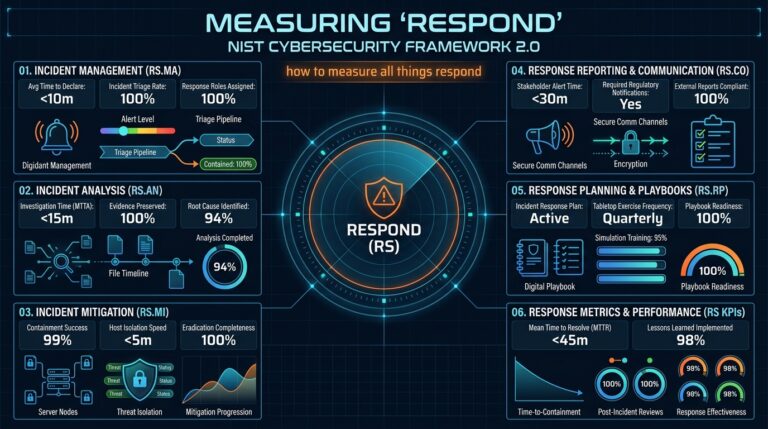
5. Respond: Training Responders for Action
When the alarm sounds, the next sixty seconds dictate your outcome. What happens next depends on preparation.
At low maturity, untrained occupants lose precious minutes to confusion while searching for extinguishers. At moderate-to-high maturity, staff members understand their roles, practice evacuation routes, and know when to let professional firefighters take over.
If you pay for private on-call fire crews to run quarterly live-fire drills, you are funding a level of readiness that standard households and businesses rarely need.
6. Insurance: Absorbing the Financial Shock
Insurance cannot put out a fire, but it absorbs the financial impact afterward by paying for structural repairs, new furniture, and temporary housing.
A homeowner with zero coverage sits at the bottom of the maturity scale. A homeowner with a policy matched to their home’s actual replacement value holds a healthy middle position. A homeowner who over-insures their house simply wastes money on premiums they will never recover.
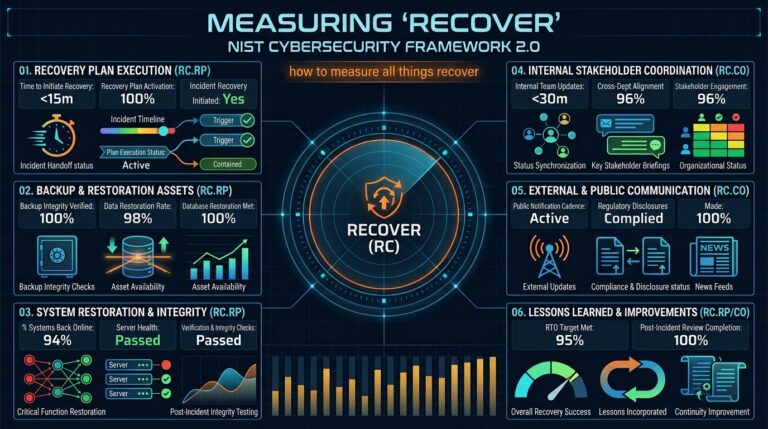
7. Recover: Getting Your Operations Back to Normal
After firefighters extinguish the flames, maturity dictates how fast you rebuild.
Low maturity leads to chaos: missing records, no contractor contacts, and zero clear next steps. High maturity means you pull a pre-built recovery plan out of a drawer, complete with asset documentation, vetted contractors, emergency funds, and alternate housing options.
Recovery planning offers one of the highest returns on investment in security. It costs very little upfront compared to the massive operational downtime it prevents.
Three Homeowners, Three Levels of Maturity
To see how these principles play out, let’s examine three identical million-dollar houses facing the exact same threat.
Homeowner 1: The Low-Maturity Gamble
This owner ignores inspections, skips sprinklers, relies on one questionable smoke detector, trains no staff, and carries no insurance. One night, a kitchen fire breaks out. Nobody notices until flames break through the roof. Staff members cannot find an extinguisher, and by the time engines arrive, the structure is gutted. Without insurance, the owner absorbs every dollar of loss directly. They saved money on security for years, only to spend those savings on one catastrophic night.
Homeowner 2: The Balanced Approach
This owner sets a real budget, maps risks, installs targeted sprinklers and extinguishers, monitors smoke detectors, trains staff, buys right-sized insurance, and maintains a recovery plan. When a kitchen fire breaks out, sensors detect it within seconds. Staff execute the plan, firefighters contain the damage to one room, and insurance absorbs the financial impact. The house was never fireproof; it was fire-ready, and that was enough.
Homeowner 3: The Over-Engineered Bunker
This owner decides no maturity level is high enough. They install redundant suppression systems in every closet, retain private security guards around the clock, run monthly live-fire drills, and over-insure the structure. These measures cost millions of dollars every year, far exceeding the value of the home. When a fire occurs, systems extinguish it instantly. Yet, Homeowner 2 achieved the same outcome at a fraction of the price. Homeowner 3 did not make their home meaningfully safer; they just made themselves poorer.
Why Maximum Security Yields Diminishing Returns
Line up these three scenarios, and the pattern becomes clear. Low maturity guarantees that when an incident occurs, you will lose far more than necessary. As you move up the ladder, that worst-case outcome grows dramatically less likely.
However, the risk curve bends quickly:
- The First Jump: Moving from low maturity to solid, moderate maturity buys massive risk reduction for a reasonable investment.
- The Second Jump: Moving from solid maturity to maximum maturity buys a tiny incremental risk reduction for an astronomical price tag.
Spending your way to the absolute top of the scale does not buy extra safety. It means spending ten million dollars to protect a one-million-dollar asset. That approach might look impressive, but it remains financially indefensible.
Calculating Your Target Maturity with FAIR
Rather than guessing where to stop on the maturity scale, security leaders use the FAIR (Factor Analysis of Information Risk) framework to calculate optimal defense levels with quantitative data.
FAIR breaks risk into two simple variables:
Risk = Loss Event Frequency × Loss Magnitude
Here is how security maturity acts on both sides of the FAIR equation:
- Resistance Strength (Protect & Detect): Higher maturity in protection and detection lowers the Loss Event Frequency. Stronger defenses mean fewer attempts by arsonists turn into actual fires.
- Loss Control (Respond & Recover): Higher maturity in response, insurance, and recovery lowers the Loss Magnitude. When a fire breaks out, effective response controls turn a total loss into a contained, recoverable event.
FAIR translates maturity improvements into financial terms. If a $50,000 investment in monitored detection reduces expected annual losses by $300,000, you have a clear business case for your board.
Conversely, if upgrading from “very good” detection to “maximum” detection costs $500,000 but only reduces expected annual losses by $5,000, FAIR proves you should stop climbing. You can redirect those funds toward staff training or recovery planning where they generate real value.
FAIR does not just justify security spending; it defines your stopping point.
Mapping the Analogy to the NIST Cybersecurity Framework
The house analogy mirrors how modern organizations manage cyber risk. The elements of our story map directly to the NIST Cybersecurity Framework (CSF 2.0):
| House Analogy Element | NIST CSF Function | Core Security Action |
|---|---|---|
| Fire codes & budgets | Govern | Establishing leadership oversight, risk strategy, and policies. |
| Room maps & hazard lists | Identify | Asset management, vulnerability assessment, and risk mapping. |
| Extinguishers & sprinklers | Protect | Access control, data security, and defensive safeguards. |
| Monitored smoke detectors | Detect | Continuous monitoring, SIEM alerts, and anomaly detection. |
| Evacuation drills & fire department | Respond | Incident response plans, containment, and triage execution. |
| Rebuilding plans & temporary housing | Recover | Business continuity, disaster recovery, and system restoration. |
A business operating with low maturity across these functions might get lucky for a while. However, when an incident occurs, low maturity turns a routine event into a front-page crisis.
On the flip side, chasing maximum maturity across all six functions wastes capital on risks that do not justify the cost; capital that could otherwise fund business growth.
Building a Fire-Ready Business
Cybersecurity is not about building an impenetrable fortress. That house does not exist, and attempting to build it will exhaust your budget before an attacker ever tests your perimeter.
Success means choosing the right maturity level for each component of your program:
- Mature enough that minor incidents stay minor.
- Disciplined enough to direct capital where it reduces measurable risk.
- Honest enough to acknowledge that maximum maturity is rarely where a rational business needs to operate.
Sensible protections, fast detection, trained responders, right-sized insurance, and clear recovery plans do not guarantee a fire will never start. They deliver a far more achievable outcome: when a spark inevitably lands, your house stands firm, and your team handles the situation with confidence instead of watching the business burn.