Traction
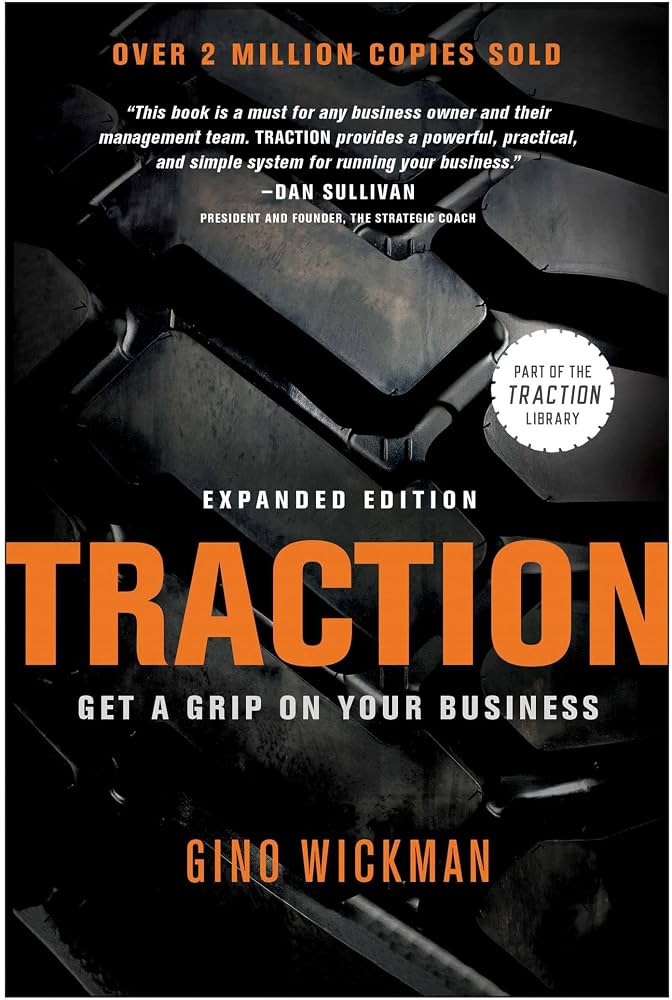
I was introduced to Traction about 8 years ago as of this writing and I found it actually really good to drive the company forward strategically and operationally.
Instead of wasting time trying to decipher vague goals or weird office politics, this book gave me a simple lens to size things up fast:
- Is everyone on the same page? I can instantly see if the team agrees on where we’re going, or if everyone is just doing their own thing.
- Are the right people in the right spots? The book’s simple filter, does someone get their job, want their job, and actually have the capacity to do it? It makes evaluating team fit straightforward and drama-free.
- Are decisions backed by real facts? It helps me spot whether the company runs on solid weekly numbers or just gut feelings and whoever shouts the loudest.
- Do we actually fix problems? I get a clear playbook for digging down to the root cause of an issue instead of just throwing band-aids on symptoms over and over.
- How fast do things get done? Concepts like 90-day goals (“Rocks”) and weekly check-ins mean I can jump right into the rhythm, hold myself and others accountable, and make an impact on day one.
There’s a whole “Enterprise Operating System” and it has 6 main points.
Vision: Aligning everyone in the organization so they share the exact same vision for where the business is going and how it plans to get there (captured using the 2-page Vision/Mission TractionOrganizer, or V/TO).
People: Ensuring you have the “Right People in the Right Seats.” This means matching team members with your core values (Right People) and ensuring they Get it, Want it, and have the Capacity to do their specific jobs (Right Seats).
Data: Running the business on objective numbers rather than subjective feelings, assumptions, or ego, primarily managed through a weekly Scorecard of 5–15 high-level metrics.
Issues: Creating a culture of absolute honesty where problems are smoked out, discussed open-endedly, and solved at their root cause using the IDS process (Identify, Discuss, Solve).
Process: Systematizing and documenting the core operational workflows (the “EOS Way”) to ensure consistency, efficiency, and scalability across the entire company.
Traction: Bringing real-world discipline and accountability into daily execution through 90-day priorities (Rocks) and highly structured weekly leadership check-ins (Level 10 Meetings).