The Goal
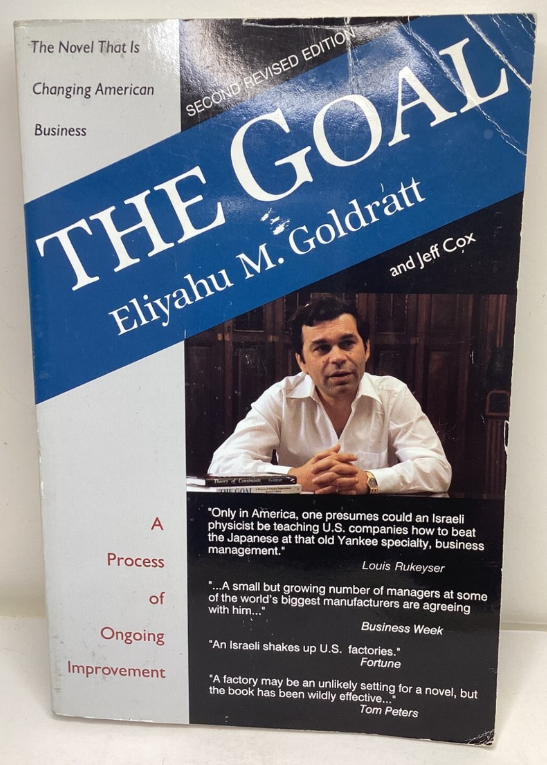
This book is dated, so understand that if you are going to buy it. This is a story book style on the theory of constraints and how to manage them. I did like this book a lot. When I say the book is dated, it comes off as misogynistic or paternal.
Anyway, the theory of constraints is about mapping out a whole process to see where the bottlenecks are and then moving things around to the speed of that bottleneck. This book, while is about manufacturing, is more about the system as a whole. If you make widgets and you can stamp out 1,000 widgets an hour, but painting and drying takes 6 hours to do 500 widgets, then it makes no sense to make so many widgets. You might have people standing around on the clock in line waiting for the paint to dry. If you move unpainted widgets into storage to wait for them to get painted, then you’re also losing money on storage. If everything gets done and sales aren’t eating up 100% of your widgets and you have inventory, then you have to pay for storage of completed widgets too.
The “official” theory of constraints is a 5 step process/loop:
- Identify the constraint: find the part o the process that sets the max speed limit for the entire operation
- Exploit the constraint: get max output from the bottleneck using existing resources, don’t let that constraint sit idle
- Subordinate everything else: align all other operations to match the pace of the bottleneck. non-bottleneck resources must intentionally run below 100% capacity so they don’t overproduce work-in-progress inventory
- Elevate the constraint: if output is still insufficient after exploiting and subordinating, invest additional time, money, or hardware to increase the bottleneck’s total capacity
- Prevent inertia: Once the bottleneck is broken, it moves somewhere else, goto step 1
Bottlenecks aren’t always physical machines on factory floors. They usually fall into 1 of 3 categories
- Physical: limited equipment, floor space, computing power, headcount
- Market constraints: supply exceeds demand, so maybe marketing or sales is the constraint
- Policy constraints: Outdated rules, metrics, or management habits (“But we always did it this way!”)
Get the book, The Goal, here